Tempranillo Inc. is a pioneer of Spanish wines featuring the selections from heralded importer Jorge Ordonez. Before Tempranillo came on the scene about ten years ago only a handful of familiar names were available to the market. I first dealt with them shortly after my first trip to Spain and considered them a treasure. The market for Spanish wines has gotten condiderably broader with several recent importers, thankfully, but TI has been and continues to be a prime source.
TI doesn't always have a regular spring/fall tasting event schedule so I make sure to be a part of this one situated at the stylish BLT (Bistro Laurent Tourondel) Prime, itself of prime dry-aged steaks. However, today the tables are moved to open space for wine bottles. While the typical tasting event has a table set up with an assortment of cheeses, bread and maybe even some cured meats, Tempranillo gets a gold medal for having a whole leg of aged jamon serrano being expertly hand cut - with the grain in small slivers - as it is done in Spain. A special treat for our palate.

The front seat of my Ford Fiesta while cruising vineyards in France
Wednesday, September 29, 2010

Wednesday, September 22, 2010
David Bowler Wines - Fall 2010
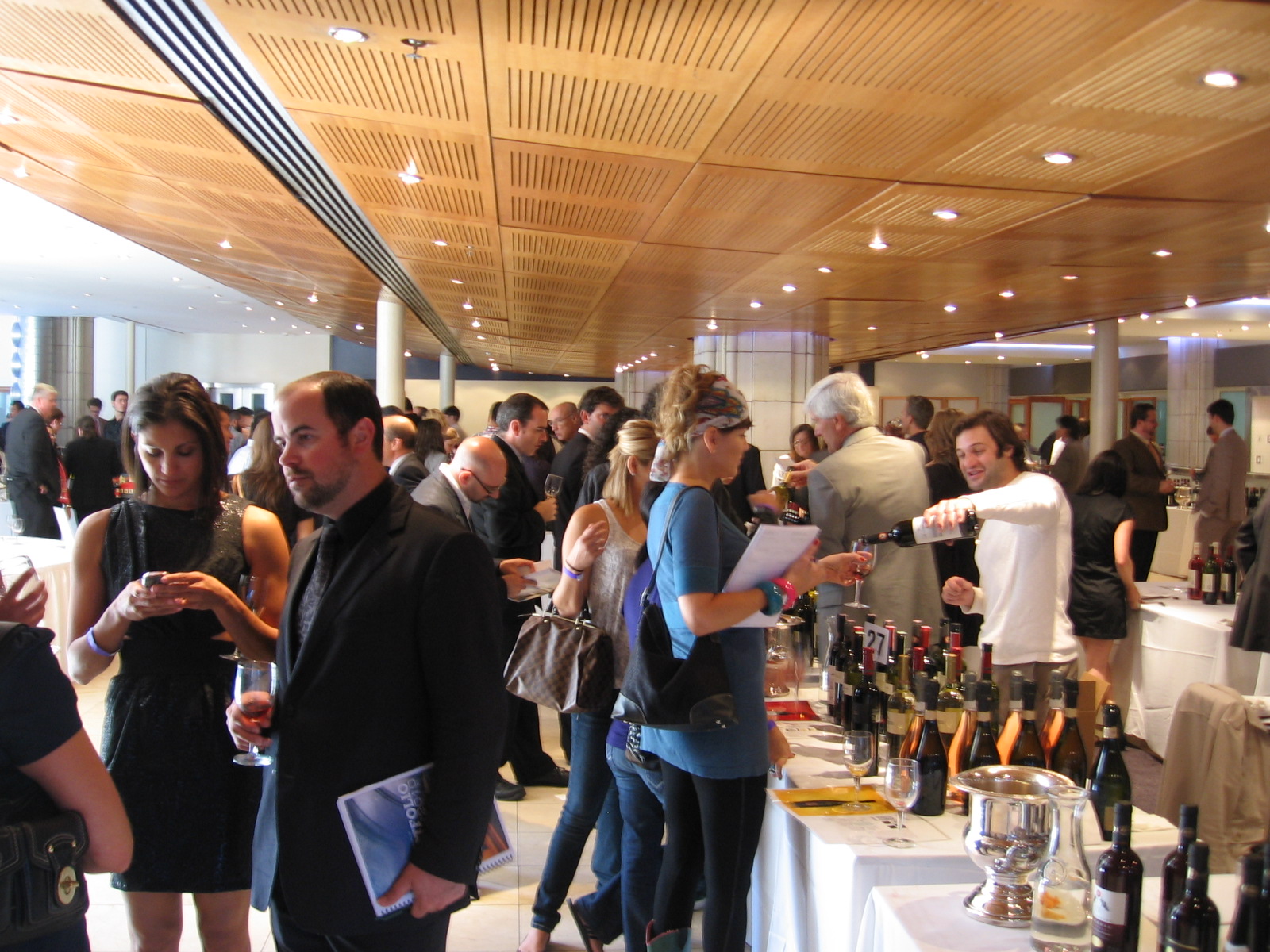
Wine distributor, David Bowler, always offers a number of interesting wines and has now raised the roof with the acquisition of my favorite importer, Joe Dressner. Bowler makes regular use of the restaurant Tribeca Grill, usually taking up the entire dining room, however this time the tasting is confined to the upstairs banquet room for a more focused product selection.
 The space is a bit cramped and hard to get to some tables which I had to bypass and a very warm late September day has a habit of making this south-facing room too hot for the wines and the wilting participants. Nevertheless, I would never miss a Bowler event.
Afterwards, I travel to the Lower East Side where I dined last week to check out Ed's Lobster Bar located on Lafayette St near Kenmare St. across from tiny Petrosino Square, an odd crossroad connecting Little Italy, the Bowery, Chinatown and SoHo in an exciting, bustling neighborhood.
I found the concept of a New England style seafood restaurant that featured lobster to be interesting. The place is about a wide and long as a bowling alley except for a enlarged area with tightly packed tables in the back. Aside from the narrow space, there is a long white marble bar with beadboard behind the seats and exposed brick - both whitewashed, behind the bar.


Ed's offers four quality draught beers including the crisp, refreshing Gaffel Kolsch, a good compact selection of wines and classic cocktails.

Afterwards, I travel to the Lower East Side where I dined last week to check out Ed's Lobster Bar located on Lafayette St near Kenmare St. across from tiny Petrosino Square, an odd crossroad connecting Little Italy, the Bowery, Chinatown and SoHo in an exciting, bustling neighborhood.
I found the concept of a New England style seafood restaurant that featured lobster to be interesting. The place is about a wide and long as a bowling alley except for a enlarged area with tightly packed tables in the back. Aside from the narrow space, there is a long white marble bar with beadboard behind the seats and exposed brick - both whitewashed, behind the bar.

The counter of Ed's Lobster Bar which
holds about 60% of the seating.
While Ed's offers a nice selection of oysters, clams and mussels, the lobster is the show and the featured lobster roll is the head banging headliner. A heaping mound of tail, knuckle and claw, dressed with a deft touch of mayonnaise is mounted onto a butter-toasted, top-sliced hog dog bun and plated with crunchy golden brown fries and house-made pickles at market price ($27). I was sceptical that I was getting all lobster when I saw what might be red pepper, but it was actually the coral tinged knuckle meat. Excellent sandwich.

The lobster roll plate from Ed's
Tuesday, September 21, 2010
September Tripleheader
The fall tasting season gets seriously heated up this day with three viable venues.


I decide the tasting of Terry Thiese Champagnes is best done with a fresh palate a head to City Winery, a unique combination of urban winery, music stage and restaurant. Theise's renown Champagne, German and Austrian imports have been sold through Michael Skurnik Wines for some time and these featured Champagnes are always one of my favorite attractions of the season.

A table of wine from Skurnik at City Winery.
I first came across Theise's selection of small producer Champagnes in 1998 while working at a top wine retailer in San Francisco, about the same time they first appeared on the scene and have been a big fan ever since. For the past few years I have been tasting these Champagnes three of four times a year. They are spectacular and unique.
Part two of the days three tastings is just a short walk to Skylight, an 18,000 sqft special event gallery for Winebow which features the Italian portfolio of Winebow's founder, Leonardo LoCascio's as well as a broad market of popular brands and an excellent group of mostly French wines from top importer Kermit Lynch. Being a regular attendee of Winebow I am very familiar with the offerings and just poke through a modest amount of samples just to stay on top of the portfolio.

Winebow at Skylight.
After a brief lunch of bruschetta at the tiny wine bar, Ino in the West Village, I make way to the Path train to Newark and the short walk to the New Jersey Performing Arts Center, the host for R & R Wine Group a major wine/liquor distributor in New Jersey. Here I am able to get re-acquainted with several major brands and to see what's hot in the spirits category. It was a good experience and ran into a friend that now works for R & R.

NJPAC offers a main floor plus three levels of display.

The major distributors usually offer a large selection
of items to sample - both wine and food.
I started the day on the road starting at 8:30am and make it home around eleven o'clock. A long, but rewarding day.
Wednesday, September 15, 2010
Frederick Wildman 2010 Fall Event
For the third consecutive year Wildman held their event at Gustavino's, tucked away under the Queensboro Bridge at 59th Street. I like Gustavino's for its spaciousness. Sometimes these events can get quite crowded and one can end up jostling for position. Not here.
 Wildman's portfolio is diverse with a little bit of everything from everywhere. The highlights for me were the quality Austrian selections from import partner Monika Caha. Every session she seems to add something exciting and new. While the Austrian grape, gruner veltliner, has made its way into American retailers and onto better wine lists, they are still unrecognizable to most. Too bad. Gruner has become one of my favorite white wines and easily one of the most adaptable to dining and social situations and Monika has a bunch of exceptional ones at popular prices.
 At table 34, I revisited the unique wines of Cleto Chiarli. This is an old family name of producers of real lambrusco in Emilia-Romagna, not to be confused with the cheap sweet lambrusco's popular in this country. While not classic wines, in that they are not made from vitis vinifera grapes, but they are indeed classic in that they are remarkable pairings with food and the sparkling rose is spectacular.
A pleasant surprise were the Champagnes from Besserat de Bellefon situated in Epernay. I know I've seen this label before, but during this tasting I came away very impressed.
 After the tasting I zipped south on the 6 train to the funky Lower East Side. I went to check out a new place called The Meatball Shop. All meatballs, all day. Typical of many places in this part of town the space is small with only thirty-nine seats including the modest bar where I am. It has a retro look harkening back to pre-WWII with old photos and a collection of meatgrinders on the wall. The open windows in the front gave it a more open, breezy atmosphere with a view of the sidewalk tables and the street scene. If I turn to the left I have a grand view of the open kitchen which seems to have more staff than necessary in a symphony of organized chaos.

The basic formula is to order a type of meatball (beef, spicy pork, chicken, fish or special) paired with a sauce then the option of either on the side of or on top of a starch (mashers, risotto, polenta, spaghetti or rigatoni). There are also subs and single sliders or just plain naked. I selected the special meatball, jambalaya, four balls made of pork, shrimp and speckled with rice placed on top of risotto and lightly sprinkled with aged cheese. I also selected a side garden salad and a draught Pironi for a total pre-tax bill of $20. While I didn't order a classic dish, these balls were right on. Good flavor and texture. The risotto was acceptable, but can be hard to pull off in this kind of setting. Better off with mashers or a pasta, though the creamy polenta sounds good for next time.

The staff was helpful and reasonably attentive though the place doesn't develop a queue until about seven o'clock, about two hours later than my arrival. They stay open until 2am and to 4am Thursday-Saturday. The menu is covered in plastic with a glass of marker pens to check off your selections. The classic green rimmed diner plates and vintage mis-matched silverware are all in line with the cuisine and decor style. Well thought out I thought. Aside from the Pironi there are two other draught spigots, a well thought out bottled beer selection and a tidy, yet solid wine list.

A pleasant surprise were the Champagnes from Besserat de Bellefon situated in Epernay. I know I've seen this label before, but during this tasting I came away very impressed.


The bar/counter at The Meatball Shop.

The Meatball Shop menu.
Monday, September 13, 2010
First Tasting of the Fall Season
Monday was the beginning of the 2010 fall tasting season commencing with a doubleheader. I arrive earlier than usual at 10:30am for Jenny & Francois Selections and what has become one of two of my most anticipated events.
Jenny has a collection that is entirely made up of natural/organic wines, predominately from France. These wines have a unique character that I find extremely attractive. For me, they bring back a sensibility of winemaking from a time past, before chemical manipulation became more common. While some wines are just plain funky, most are very enjoyable and fairly priced in a retail setting.
Amongst the highlights were the Sablonettes gamay (Copains Aussi) and their grolleau (Copains d'Abord from the Vin de Table wines from the Anjou area. The Tournelle wines from Arbois made from ploussard. L'Anglore produced an old vine Vin de Table blend of carignan with a small portion of grenache and clairette from just outside of Avignon in the southern Rhone and the Rimbert wines from St Chinian in Languedoc.
Taking a break between set of events I had a modest walk over to Gramercy Tavern for lunch. While I have been there several times, I couldn't resist the allure of my favorite appetizer, their carrot and calamari salad. I also ordered the seafood chowder accented with fennel and accompanied by a glass of Lambrusco sparkling rose.


Jenny has a collection that is entirely made up of natural/organic wines, predominately from France. These wines have a unique character that I find extremely attractive. For me, they bring back a sensibility of winemaking from a time past, before chemical manipulation became more common. While some wines are just plain funky, most are very enjoyable and fairly priced in a retail setting.
Amongst the highlights were the Sablonettes gamay (Copains Aussi) and their grolleau (Copains d'Abord from the Vin de Table wines from the Anjou area. The Tournelle wines from Arbois made from ploussard. L'Anglore produced an old vine Vin de Table blend of carignan with a small portion of grenache and clairette from just outside of Avignon in the southern Rhone and the Rimbert wines from St Chinian in Languedoc.
Taking a break between set of events I had a modest walk over to Gramercy Tavern for lunch. While I have been there several times, I couldn't resist the allure of my favorite appetizer, their carrot and calamari salad. I also ordered the seafood chowder accented with fennel and accompanied by a glass of Lambrusco sparkling rose.

At the bar at Gramercy Tavern

The beloved carrot and calamari salad
Next up was the 25th Anniversary Grand Portfolio Tasting with Martin Scott at the Lincoln Center. As I am familiar with their book, I browsed about to re-familiarize myself with their staple items. The Martin Scott portfolio has never been more deep and diverse. I still find the Ole Imports to be worthy as well as the Italian selections. While they have a broad selection of well known domestic pinot noirs, I still find most of them to be over-ripe and over priced.
Martin Scott tasting at Lincoln Center.
There was another level below and in a side corridor.

Tuesday, July 13, 2010
Dolin Vermouth de Chambéry
Late this winter, I was reading an archive from the San Francisco Chronicle by Jon Bonne regarding cocktails. Having spent several years in SF, including my period of transition at the California Culinary Academy, cooking at restaurant Socca and retailing at the Wine Club, I regularly keep in touch with the goings on of The City. The article heralded the availability of Dolin de Chambery vermouth. I've never seen it or heard of it, but apparently it had been popular in the past and was making a comeback.
As it was not being distributed in New Jersey and certainly not behind the iron curtain of Berlinsylvania, I made a point of stopping by one of my favorite wine stores after a Manhattan wine tasting event to bring home the Dolin.
For a martini, I like to use an elegant - less astringent, yet aromatic gin like Plymouth from England or the Dutch style Boomsma. I found the Dolin dry white vermouth to be of superior quality to the usual suspects. Dolin de Chambery comes from the Savoie region of eastern France, adjacent to the Alps and where better to source fine Alpine botanicals, the prime flavoring accent in vermouth.

The wine aspect was crisp and flavorfully smooth and the herb and botanical part offered delicate complexity that allows it to be a delicious drink on its own, served on the rocks. As part of a martini, used in a more generous portion, the cocktail was fabulous.
Over the spring while attending several wine tastings for the trade, I made a point of having a post-tasting martini at various NYC restaurants to see how Dolin was being used. I always asked the bartender if they had Dolin when ordering and the answer was usually - yes. This vermouth has really overtaken the city like few products I've seen. It seems like overnight it's replaced the commercial vermouths like the pod people replaced humans as in the 50's sci-fi movie, Invasion of the Body Snatchers.
The NYC bartenders seemed quite pleased too at this change of the guard. One was very generous in offering samples of the Dolin Blanc which is slightly off dry and with a softer texture similar to Lillet. The Rouge, was less sticky sweet than commercial varieties and possessed a pleasant, herbal quality which should improve a Manhattan cocktail and is enjoying quite a comeback as a delicious aperitif.
While it is still not available anywhere near my home of Philadelphia, I gladly make arrangements to pick up a bottle on occasion for personal use. It's one of those products that is definitely worth the extra effort to hunt down.
As it was not being distributed in New Jersey and certainly not behind the iron curtain of Berlinsylvania, I made a point of stopping by one of my favorite wine stores after a Manhattan wine tasting event to bring home the Dolin.
For a martini, I like to use an elegant - less astringent, yet aromatic gin like Plymouth from England or the Dutch style Boomsma. I found the Dolin dry white vermouth to be of superior quality to the usual suspects. Dolin de Chambery comes from the Savoie region of eastern France, adjacent to the Alps and where better to source fine Alpine botanicals, the prime flavoring accent in vermouth.

The wine aspect was crisp and flavorfully smooth and the herb and botanical part offered delicate complexity that allows it to be a delicious drink on its own, served on the rocks. As part of a martini, used in a more generous portion, the cocktail was fabulous.
Over the spring while attending several wine tastings for the trade, I made a point of having a post-tasting martini at various NYC restaurants to see how Dolin was being used. I always asked the bartender if they had Dolin when ordering and the answer was usually - yes. This vermouth has really overtaken the city like few products I've seen. It seems like overnight it's replaced the commercial vermouths like the pod people replaced humans as in the 50's sci-fi movie, Invasion of the Body Snatchers.
The NYC bartenders seemed quite pleased too at this change of the guard. One was very generous in offering samples of the Dolin Blanc which is slightly off dry and with a softer texture similar to Lillet. The Rouge, was less sticky sweet than commercial varieties and possessed a pleasant, herbal quality which should improve a Manhattan cocktail and is enjoying quite a comeback as a delicious aperitif.
While it is still not available anywhere near my home of Philadelphia, I gladly make arrangements to pick up a bottle on occasion for personal use. It's one of those products that is definitely worth the extra effort to hunt down.
Wednesday, June 9, 2010
Rudipalooza 2010
Tribeca Grill is again the host of Rudipalooza, the wine event for German wine importer Rudi Wiest. Along with Therry Thiese, they are the two top importers of German wine in my opinon. What's different about Rudi’s portfolio and intensions is that he emphasizes the dry quality of German wines like no other does. Most consumers relate to German wines as being sweet. But I had discovered during a group trip I was a part of led by Rudi in the summer of 2008, how dry wines are really the German style and how little they are understood.

In attendance at the tasting were many of the winemakers that I had visited. Even though the samples were smaller than the past and there were a few less people in attendance than in the past, it was another successful showing of the featured 2009 vintage.
Going a bit off dry is the sumptuous wines from Monchhof. Some of my other favorites were Kunstler, Zilliken, von Hovel, Karthauserhof and von Buhl.
After the tasting I ventured over to Daniel Boulud’s DBGB, his one year old bistro that specializes in various sausages and stellar selection of draft beers. I had a starter of pork rillettes accompanied by pickled onions and cornichons. I also had a Boudin Basque, a patty of mildly seasoned blood sausage on top of a too small dab of scallion mashed potatoes. The last course was The Berliner, a thicker version of a frankfurter that had a soft, squishy texture and seemed lacking of seasoning. It came with a less than exciting summer radish slaw.
I believe I've been to DBGB four times now and while I enjoy my time there, the sausages are rarely exceptional. Just goes to show you how far good hospitality with take you.

Rudi on the right at the home of Manfred Prum (left)
of J.J. Prum taken from a 2008 tour of his winemakers.
In attendance at the tasting were many of the winemakers that I had visited. Even though the samples were smaller than the past and there were a few less people in attendance than in the past, it was another successful showing of the featured 2009 vintage.
Going a bit off dry is the sumptuous wines from Monchhof. Some of my other favorites were Kunstler, Zilliken, von Hovel, Karthauserhof and von Buhl.
After the tasting I ventured over to Daniel Boulud’s DBGB, his one year old bistro that specializes in various sausages and stellar selection of draft beers. I had a starter of pork rillettes accompanied by pickled onions and cornichons. I also had a Boudin Basque, a patty of mildly seasoned blood sausage on top of a too small dab of scallion mashed potatoes. The last course was The Berliner, a thicker version of a frankfurter that had a soft, squishy texture and seemed lacking of seasoning. It came with a less than exciting summer radish slaw.
I believe I've been to DBGB four times now and while I enjoy my time there, the sausages are rarely exceptional. Just goes to show you how far good hospitality with take you.
Monday, May 24, 2010
Vias Imports
This was my first visit to any Vias Imports event. Even though they self-distribute their products in NY and NJ, I had never been contacted by anyone from their firm in the past and therefore had neither tasted or purchased anything. I have seen a number of their items in NY restaurants and stores, so I was curious to see what they had to offer.
Again, the tasting was held at the Marriott Marquis, though in a smaller room. As I made my way around the room I was finding that most of the wines were of middling quality. Very little really got me excited though I will give them credit for showing some unusual varietals and appelations.
As Vias offered nothing more than cheese and bread, I left early so as to pickup some Dolin vermouth at Astor Wine and then obtain a late lunch. It was a humid day and the skies were dense with a heavy feeling rainy mist. This was very uncomfortable, so I made it to a new Mediterranean restaurant near Gramercy Square. However, it was way too warm in there and the wine selections by the glass looked pretty boring.
Luckily, Gramercy Tavern was next door and I settled in there for a lunch of carrot and calamari salad and a Plymouth and Dolin martini. The salad which I had ordered before has become a favorite of mine. Thin strips of carrot and squid in a refreshing lemon vinaigrette and garnished with pinenuts. I also had another appetizer of fish croquettes with heirloom green beans and arugula paired with a glass of Baudry Chinon rose. The croquette was perfectly crispy and crunchy, but the internal texture was on the dry side. Would not likely to order that again. Having visited Baudry in the Loire recently, I couldn’t resist this rose of cabernet franc. Light, pale and refreshing.
Again, the tasting was held at the Marriott Marquis, though in a smaller room. As I made my way around the room I was finding that most of the wines were of middling quality. Very little really got me excited though I will give them credit for showing some unusual varietals and appelations.
As Vias offered nothing more than cheese and bread, I left early so as to pickup some Dolin vermouth at Astor Wine and then obtain a late lunch. It was a humid day and the skies were dense with a heavy feeling rainy mist. This was very uncomfortable, so I made it to a new Mediterranean restaurant near Gramercy Square. However, it was way too warm in there and the wine selections by the glass looked pretty boring.
Luckily, Gramercy Tavern was next door and I settled in there for a lunch of carrot and calamari salad and a Plymouth and Dolin martini. The salad which I had ordered before has become a favorite of mine. Thin strips of carrot and squid in a refreshing lemon vinaigrette and garnished with pinenuts. I also had another appetizer of fish croquettes with heirloom green beans and arugula paired with a glass of Baudry Chinon rose. The croquette was perfectly crispy and crunchy, but the internal texture was on the dry side. Would not likely to order that again. Having visited Baudry in the Loire recently, I couldn’t resist this rose of cabernet franc. Light, pale and refreshing.
Monday, May 10, 2010
Lauber on Times Square
Lauber Imports puts on a grand tasting event in an enormous space at the Marriott Marquis right on Times Square pretty much featuring their total portfolio. They are also noted for putting out a nice spread of food, though the lamb chops were noticeably absent this year, no doubt in a measure to cut costs.
Since being bought by a major distributor, Lauber has become more mainstream in their section. The main reason I wanted to attend was not so much to find exciting new labels, but to revisit with some popular brands and to stay in touch with what the masses are drinking. Amongst the pleasant surprises were the Henriot Champagne with its delightful crisp texture and mellow, balanced finish. A new table of Loire wines from Guy Saget were exceptional. Bright, delicious sauvignon blancs and a Muscadet.
Many of the popular brand names that proliferate corporate restaurants were there, including Jos. Phelps and Jordan. Neither offered interesting wines, either because they were overwhelming or because they were poor values or both.
I found that I munched on enough appetizers that I decided to skip any in-town meal and caught the express train home.
Since being bought by a major distributor, Lauber has become more mainstream in their section. The main reason I wanted to attend was not so much to find exciting new labels, but to revisit with some popular brands and to stay in touch with what the masses are drinking. Amongst the pleasant surprises were the Henriot Champagne with its delightful crisp texture and mellow, balanced finish. A new table of Loire wines from Guy Saget were exceptional. Bright, delicious sauvignon blancs and a Muscadet.
Many of the popular brand names that proliferate corporate restaurants were there, including Jos. Phelps and Jordan. Neither offered interesting wines, either because they were overwhelming or because they were poor values or both.
I found that I munched on enough appetizers that I decided to skip any in-town meal and caught the express train home.
Thursday, April 1, 2010
Wines of Portugal
April 1st was the annual tasting event for Wine of Portugal put on by Vini Portugal, a trade consortium promoting Portuguese wines. The setting was Cipriani 42nd Street, a banquet facility located in a once grand bank lobby. There was an exceptional table of appetizers set up on one side. A lot of marinated seafood and quality breads. I had a quick taste of marinated squid and scallops, roast peppers and a tuna tartare shaped like a meatball, before the tasting, but didn’t have time for a re-visit.
It wasn’t too long ago that I disfavored wines from Portugal as they were often over-ripe and tasted of cooked fruit. But just as Spain has greatly modernized and improved their wine, so has Portugal. These wines are now one of my top choices for quality for value wines. The biggest challenge is the wines are made from unrecognizable grapes, but once customers try them, they sell.
It wasn’t too long ago that I disfavored wines from Portugal as they were often over-ripe and tasted of cooked fruit. But just as Spain has greatly modernized and improved their wine, so has Portugal. These wines are now one of my top choices for quality for value wines. The biggest challenge is the wines are made from unrecognizable grapes, but once customers try them, they sell.
Wednesday, March 24, 2010
David Bowler Wines
The spring trade tasting event for David Bowler wines took place at Tribeca Grill on March 24th. This is one of the better suppliers though it was disappointing to learn right away that they no longer carry wines from Peter Weygandt, one of the top importers in this country. Not to worry though. Shortly after this tasting they had a major coop in taking Louis/Dressner imports from Polaner Selections.
Some of the winners were a Domaine du Tabatu “Camprigou” in St-Chinian (Languedoc), a producer I don’t recall seeing before. A red wine of expressive aromatics, perfect balance of texture, delicate red berry fruit and spice and a good value. Another star was the Le Rocher des Violettes “Cuvee Touche-Mitaine" from the village of Mont-Louis (a chenin blanc cousin of Vouvray on the opposite shore of the Loire). This is a dry, mineral driven style I’m seeing more of (and liking) as opposed to the more common demi-sec styles. Excellent, versatile wine that would retail for under $20.
Some of the winners were a Domaine du Tabatu “Camprigou” in St-Chinian (Languedoc), a producer I don’t recall seeing before. A red wine of expressive aromatics, perfect balance of texture, delicate red berry fruit and spice and a good value. Another star was the Le Rocher des Violettes “Cuvee Touche-Mitaine" from the village of Mont-Louis (a chenin blanc cousin of Vouvray on the opposite shore of the Loire). This is a dry, mineral driven style I’m seeing more of (and liking) as opposed to the more common demi-sec styles. Excellent, versatile wine that would retail for under $20.
Tuesday, March 16, 2010
Polaner at Gotham Hall
This tasting was hosted by New York based Polaner Selections and has been one of my most important suppliers of quality and value wines. Not made up of recognizable brand names, but truly authentic wines of character. I always look forward to their trade tasting event, especially since they only do one annually as opposed to others which will have one in spring and fall each year. Held in Gotham Hall, once a grand bank lobby, it is also one of the more attractive settings.
In addition to their own imports, they also distribute wines from two top level importers. Eric Solomon, based out of North Carolina has an exceptional Spanish and French book. Among these is the Sitios de Bodega “Con Class” Rueda, a top selling under $10 white wine from the Castilla y Leon region of Spain made mostly from the Verdejo grape.
The wines from importer Louis/Dressner and its principal, Joe Dressner, are my favorites. Mostly French, and with a large representation of my favorite wine region, the Loire Valley.
One of my favorites from his portfolio and probably the most consumed white wine by myself over the last twelve months is the Muscadet “Clos de Briords” from Domaine Pepiere. Delicious on its own and fantastic with seafood, this is the quintessential fish wine. Bone dry with citrus and the mineral essence of wet stones.
Having forgot to bring my NYC Metro pass, the chose to dine within a reasonable walking distance and walked from Broadway and 36th to B’way and 20th to Gramercy Tavern. There I started with the Merguez sausage with chick peas and Swiss chard, almond and harissa for which I paired with a cool fizzy glass of dry, red Lambrusco.
For mains I had simple pan-roasted chicken with parsnips and carrots. Their chicken is so tender and delicate. Good stuff. I had a Cuvee Pif from Clos Roche Blanche in Touraine. This is made from Cot (malbec) and Cabernet Franc and is named after the owner’s border collie mix. Pif essentially translates to nose.

Photo of Pif and the newly uninvited Seccotine the cat
in the cave at Clos Roche Blanche in 2008
Wednesday, March 10, 2010
Re-Summit
Back again to the offices of Wildman, this time for a presentation of their German portfolio and along with Austrian wines from Monika Caha and Francois Baur, a family run winery in Alsace.
Baur was represented by Virginie Baur of the 9th generation, the daughter of the current winemaker, Pierre Baur. I first met Virginie when their wines were first being imported to the US in 2000 and I was acting sommelier at Brasserie Perrier. I laso had the chance to visit at their home in Turckheim. I was thoroughly impressed with the wines then and continue to be. A true representation of Alsace style.
Monika Caha has been importing wines through Wildman for about three years. A native of Austria, she displays true passions for the Austrian wines in her portfolio and they are very good. The gruner veltliner grape has become one of my favorite food wines as well as for sipping on the patio. She also had an interesting dry, aromatic muscat and a flinty, tangy sauvignon. The reds have never been better. Too often they can be over extracted and flabby, but her samples of zweigelt and the blaufrankisch had terrific texture and balanced wild brier scented blue fruits.
The German portfolio was focused on the more drier styles. While German wines are associated with sweet wines, the preferred style in Germany is decidedly drier and that is a message they are trying to get out to the public here.
Across the board, these were very good wines. Riesling is enjoying a great deal of popularity today. People need to get better acquainted with the drier styles which are more versatile and better quality.
Baur was represented by Virginie Baur of the 9th generation, the daughter of the current winemaker, Pierre Baur. I first met Virginie when their wines were first being imported to the US in 2000 and I was acting sommelier at Brasserie Perrier. I laso had the chance to visit at their home in Turckheim. I was thoroughly impressed with the wines then and continue to be. A true representation of Alsace style.
Monika Caha has been importing wines through Wildman for about three years. A native of Austria, she displays true passions for the Austrian wines in her portfolio and they are very good. The gruner veltliner grape has become one of my favorite food wines as well as for sipping on the patio. She also had an interesting dry, aromatic muscat and a flinty, tangy sauvignon. The reds have never been better. Too often they can be over extracted and flabby, but her samples of zweigelt and the blaufrankisch had terrific texture and balanced wild brier scented blue fruits.
The German portfolio was focused on the more drier styles. While German wines are associated with sweet wines, the preferred style in Germany is decidedly drier and that is a message they are trying to get out to the public here.
Across the board, these were very good wines. Riesling is enjoying a great deal of popularity today. People need to get better acquainted with the drier styles which are more versatile and better quality.
Monday, March 8, 2010
Jenny & Francois at the Smith's
This is my fourth year of attending Jenny’s events and I am happy to have been a part of her tasting from the beginning as I have seen her portfolio grow from a group of largely eclectic and funky wine to a collection of some of the most interesting wines on the market.
Jenny’s portfolio focuses on natural and organic wines, mostly from France where she had spent a lot of time and where her partner is from and France is where the natural wine movement is strongest, particularly the Loire and southern France.
The first Jenny tasting that I attended was made up mostly of funky, off-tasting wines. Clearly many in her group had not yet perfected the art of working with natural wines. But it has gotten progressively better with each event.
One of my favorites from this tasting was the new label from Vincent Careme in Vouvray, a chenin blanc village in the Loire Valley. These were some of the most interesting Vouvray’s I’ve ever had. Highly aromatic with lemon curd, beeswax and mineral with a mouthfilling, mellow texture and long finish.
Another exciting newcomer was a sparkling wine from Burgundy by Catherine and Dominique Derain. Dominique Derain is a barrelmaker and decided to try his hand in winemaking. He met his wife in winemaking school in Beaune. Normally, sparkling Burgundy would be made from the locally renowned grapes chardonnay and pinot noir. Derain uses the locally accepted, but obscure aligote which is associated with cheap wine bar whites often mixed with cassis to make a Kir Royale cocktail. This is just another example of what can happen when a lowly grape is lovingly attended to.
This had a really unique and mellow mousse with flavors of treefruits, light spice and a tangy, lemony finish. Despite Dominique’s background as a barrelmaker (cooper), he uses no new oak. The production is so small that his may become hard to get is a New York restaurant takes a stand on this. Hope not.
Jenny’s portfolio focuses on natural and organic wines, mostly from France where she had spent a lot of time and where her partner is from and France is where the natural wine movement is strongest, particularly the Loire and southern France.
The first Jenny tasting that I attended was made up mostly of funky, off-tasting wines. Clearly many in her group had not yet perfected the art of working with natural wines. But it has gotten progressively better with each event.
One of my favorites from this tasting was the new label from Vincent Careme in Vouvray, a chenin blanc village in the Loire Valley. These were some of the most interesting Vouvray’s I’ve ever had. Highly aromatic with lemon curd, beeswax and mineral with a mouthfilling, mellow texture and long finish.
Another exciting newcomer was a sparkling wine from Burgundy by Catherine and Dominique Derain. Dominique Derain is a barrelmaker and decided to try his hand in winemaking. He met his wife in winemaking school in Beaune. Normally, sparkling Burgundy would be made from the locally renowned grapes chardonnay and pinot noir. Derain uses the locally accepted, but obscure aligote which is associated with cheap wine bar whites often mixed with cassis to make a Kir Royale cocktail. This is just another example of what can happen when a lowly grape is lovingly attended to.
This had a really unique and mellow mousse with flavors of treefruits, light spice and a tangy, lemony finish. Despite Dominique’s background as a barrelmaker (cooper), he uses no new oak. The production is so small that his may become hard to get is a New York restaurant takes a stand on this. Hope not.
Tuesday, February 9, 2010
Wine Summit in Summit

Today I made it to my first trade tasting of the calendar year at the Summit, NJ office of importer Frederick Wildman for sampling of their 2008 Burgundy portfolio. This was the third consecutive year for me at this event. I arrive at the office at exactly the start time of 12 noon. Another monster snow storm is expected to hit in the afternoon, just like their 2008 event, and I hope to make it through all wines and get out.
Ten years ago when I was working at The Wine Club in San Francisco, I was tasting, selling and regularly buying for my own meal pairings, a great deal of Burgundy. Back then the dollar was even with the Euro and the wines were more affordable. It’s a different story now. Today, for me, it’s all about trying to find Burgundies that offer good value for the price and that is not easy. On top of that, the 2008 vintage is expecting to be challenging, especially for the reds.
By and large, the Wildman Burgundy portfolio is filled with familiar names, but generally lacking wines from the large negocient houses that I prefer to avoid. I’m not looking for mass-market, but for some originality.
As expected, the reds were indeed difficult. It was interesting to hear the pleads from a couple of producers to essentially taste with an open mind. More like to play with our mind and convince ourselves that they are not so impressive.
While there were some worthy ones, they usually didn’t stand up to the quality/price ratio test. I’m sure there are retailers and restaurants with customers willing to buy regardless – be it for the love of the name or for lack of concern for price – but for me, a value oriented buyer, there are limited choices.
The whites, however, were quite nice, especially the Vincent portfolio which were judged by myself as best of the tasting. Vincent and their other label, Chateau Fuisse, were true character wines. When I was younger, the name Pouilly-Fuisse, the best known area in the Macon region of Burgundy, was synonymous with white French wine at restaurants. Over time, I felt that they were often over-valued and usually didn’t recommend them. But on the heels of expensive Burgundies from the Cote d’Or and California chardonnay, they have never been better.
Classically, the whites (chardonnay) from Macon have lean, crisp yet palatable acids with scents of wet stone, crisp apple-pear fruit with a touch of tangy lemon. The effect of barrel aging is typically negligible, at most a whiff of fresh wood and its spices. Delightful food wines or just to be sociable with company. And prices were reasonable.
The other whites, from the Cote d’Or, were as a group showing bright, clean acid as opposed to an overly tart green apple acid form challenging vintages or producers. The fruits tasted ripe and focused and the finish was elegant. Now about those prices. Whoa.
By the way, I made it home just as flakes were falling – so there will be another story.
Subscribe to:
Posts (Atom)